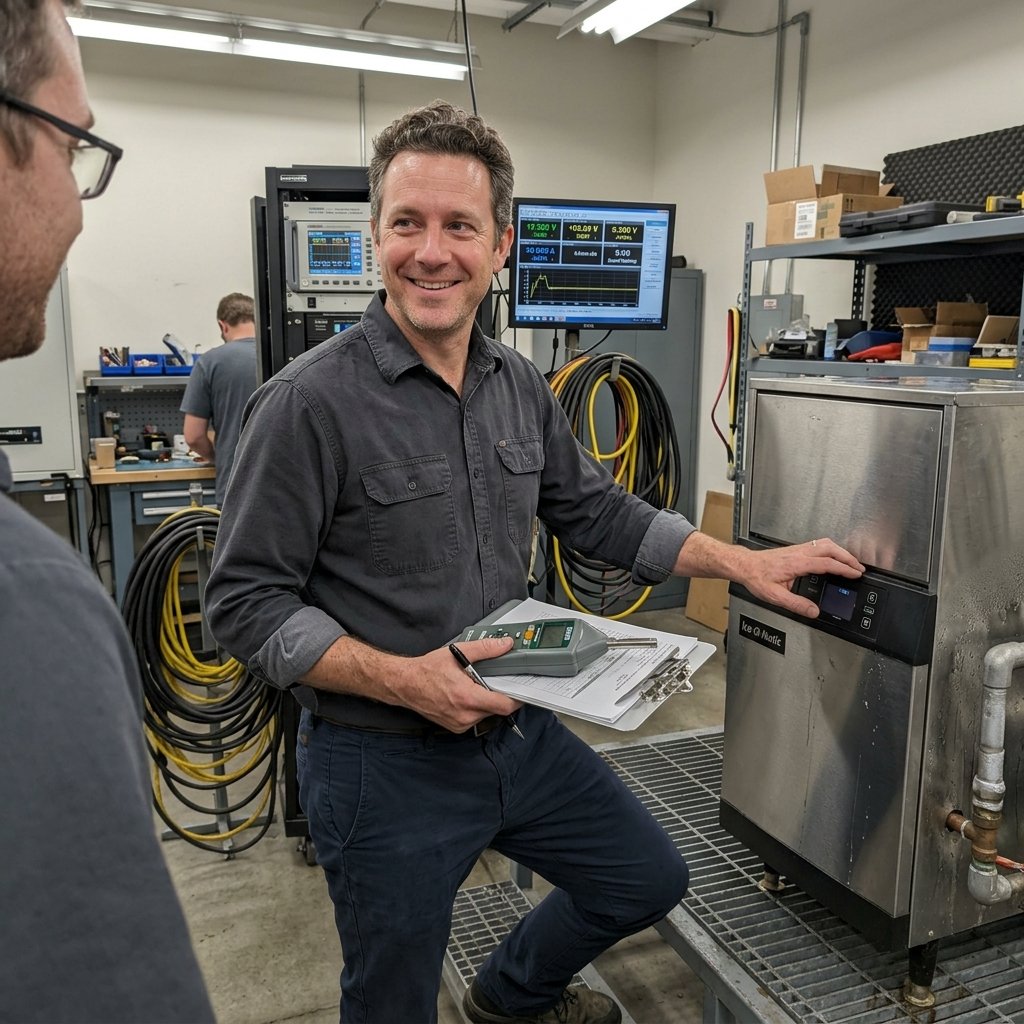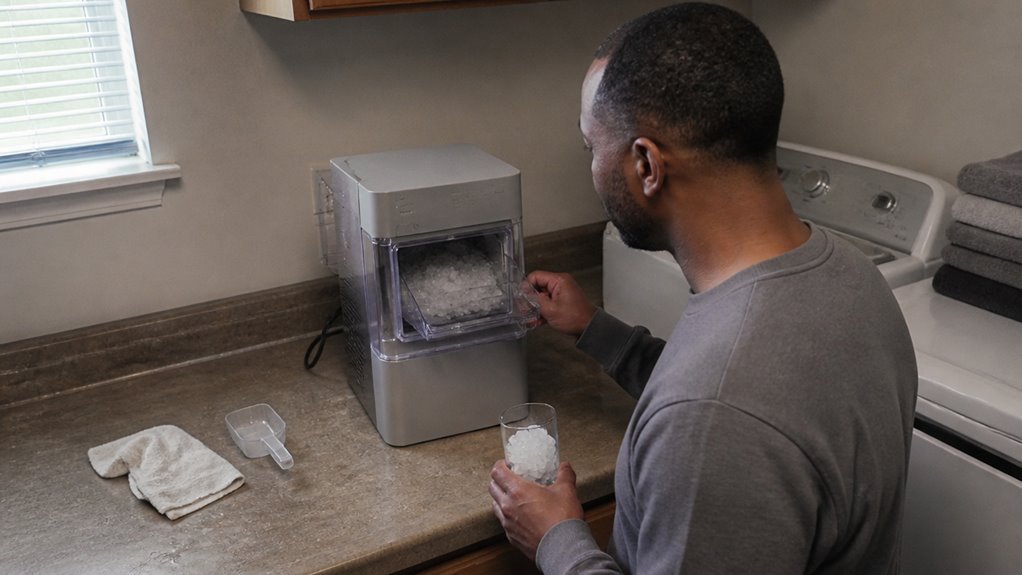
If you are looking for half-cube ice that melts slowly in your cocktail, you need a machine that matches your busiest pouring hour. You are probably tired of watery drinks and bags of cloudy cubes from the store.
This roundup covers the top six machines, from heavy-duty workhorses to compact options for a home bar.
We focus on daily output and hidden costs like installation, so you can find the right fit without surprises.
Here is the short list to start comparing your options.
Ice Highlights
- Choose the Ice-O-Matic ICE0500HA for dense, slow-melting half cubes that resist clumping in cocktails.
- Pick the Manitowoc NEO for half-dice cubes with a forward-sliding bin, ideal for tight spaces.
- Budget buyers can consider the Maxx Ice MIM85H, but its 25-pound bin fills quickly.
- Expect permanent undercounter placement and heavy installation with the Manitowoc UYF-0140A for clear half-cubes.
- Match high demand with half-cube units making 330 to 600 lb per day and larger storage bins.
| Manitowoc Indigo NXT Series Half Cube Ice Maker |  | Best Overall | Production Capacity: Up to 672 lb/24h (AHRI 554 lb at 90°/70°) | Ice Cube Shape: Half cube | Cooling System: Not specified (commercial head/bin) | SEARCH BEST PRICE | Read Our Analysis |
| Manitowoc NEO Undercounter Ice Machine 330 lb |  | Best Space-Saver | Production Capacity: 330 lb/day (AHRI 270 lb at 90°F/70°F) | Ice Cube Shape: Half dice (3/8 x 1-1/8 x 7/8) | Cooling System: Air-cooled (R290 refrigerant) | SEARCH BEST PRICE | Read Our Analysis |
| Manitowoc UYF-0140A Undercounter Ice Machine 90 lb Bin |  | Best Value | Production Capacity: 137 lb/day | Ice Cube Shape: Half dice | Cooling System: Air-cooled | SEARCH BEST PRICE | Read Our Analysis |
| Ice-O-Matic ICE0500HA Air Cooled 600 Lb Half Cube Ice Machine |  | Professional Grade | Production Capacity: 600 lb/day | Ice Cube Shape: Half cube | Cooling System: Air-cooled | SEARCH BEST PRICE | Read Our Analysis |
| Maxx Ice Self-Contained Ice Machine MIM85H |  | Compact Budget Pick | Production Capacity: 88 lb/day | Ice Cube Shape: Half dice | Cooling System: Not specified (self-contained) | SEARCH BEST PRICE | Read Our Analysis |
| Manitowoc Indigo NXT 22″ Ice Maker 490 lb/day |  | Best for Small Spaces | Production Capacity: 490 lb/24h (AHRI 425 lb at 90°/70°) | Ice Cube Shape: Half-dice | Cooling System: Water-cooled (self-contained condenser) | SEARCH BEST PRICE | Read Our Analysis |
More Details on Our Top Picks
Manitowoc Indigo NXT Series Half Cube Ice Maker
The Manitowoc Indigo NXT Series is built for high-volume bars that need a constant supply of ice during peak hours. It produces 672 pounds of cubes daily, which gives you serious firepower for a Friday rush without waiting on a slow cycle.
Its 532-pound bin stores enough backup ice for a busy shift, and the 30-inch width matches the bin for a clean, space-saving fit in tight back bars. The DuraTech finish resists the daily bumps and scratches that come with heavy use.
The 13-language display with maintenance alerts helps your shift manager catch problems early, which reduces downtime. This model suits a professional setting more than a home kitchen, since its size and output are overkill for a casual home bar.
One honest drawback is the price, which sits well above portable or undercounter units. It also needs a dedicated water line and proper drainage, so you should check the manufacturer’s instructions for installation.
Compared to a portable nugget ice maker, this unit offers far more daily ice output and a larger bin, but it is not something you can move around. For a beginner buying their first ice maker, this is a commercial-grade commitment, not a plug-and-play countertop gadget.
If you run a busy bar and want dependable output without constant refills, this machine delivers. Just plan for the installation cost and the space it takes up, and you will get clear cubes that keep your cocktails looking sharp.
- Production Capacity:Up to 672 lb/24h (AHRI 554 lb at 90°/70°)
- Ice Cube Shape:Half cube
- Cooling System:Not specified (commercial head/bin)
- Storage Capacity:532 lb bin (17.9 cu. ft.)
- Dimensions:Head 30″ W x 24″ D x 21.5″ H; Bin 30″ W x 34″ D x 50″ H
- Brand:Manitowoc
- Additional Feature:DuraTech exterior finish
- Additional Feature:13 language display
- Additional Feature:Cleaning/maintenance reminders
Manitowoc NEO Undercounter Ice Machine 330 lb
Space is the premium ingredient in any small bar, so you will love this 30-inch wide footprint. The Manitowoc NEO pumps out 330 pounds of half-dice daily, with 270 pounds certified at real-world temps, and stashes 119 pounds in its forward-sliding bin. You grab ice without playing Tetris, and the touchpad flags cleaning cycles, full bins, and filter swaps. The integrated 5-micron filter strips chlorine and sediment, which suits homeowners on well water or anyone tired of cloudy tap ice. It runs on eco-friendly R290 refrigerant, though you will hear it hum, so place it away from a seating area if noise bothers you.
This undercounter model suits a home bar or kitchen where you want built-in looks without a full renovation. Its clear strength is the forward-sliding bin, which lets you scoop ice from the front even when the unit sits flush between cabinets. The honest drawback is the audible compressor, which makes it less ideal for an open-plan living space or a quiet office breakroom. Unlike the portable nugget ice makers in this article, the NEO needs a water line and a drain, so it is not a roll-anywhere option. A beginner should plan for a licensed plumber to handle the hookup, since the manual covers the exact clearance and connection steps. Just level those six legs and pour, and you get a small footprint with big output and zero fuss.
- Production Capacity:330 lb/day (AHRI 270 lb at 90°F/70°F)
- Ice Cube Shape:Half dice (3/8 x 1-1/8 x 7/8)
- Cooling System:Air-cooled (R290 refrigerant)
- Storage Capacity:119 lb internal bin
- Dimensions:30″ W (undercounter footprint)
- Brand:Manitowoc
- Additional Feature:Forward-sliding bin access
- Additional Feature:R290 eco-friendly refrigerant
- Additional Feature:Integrated 5-micron filter
Manitowoc UYF-0140A Undercounter Ice Machine 90 lb Bin
This Manitowoc UYF-0140A is best for a home bar owner who hosts large parties and wants a permanent, built-in look under the counter. Its clear strength is the sheer daily ice output of 137 pounds, which lands in a 90-pound bin, so you will not run out mid-evening. The honest drawback is the 153-pound weight, which makes installation a two-person job, and you will rarely move it after that. Unlike portable or countertop units with a water reservoir, this is an undercounter machine that needs a drain and a water line, so plan for that plumbing before you buy.
It is air-cooled, which means no extra venting to the outside, but it still needs clearance around the sides for airflow, so check the manufacturer’s instructions for your cabinet space. The 26-inch width fits most standard undercounter openings, and it runs on a regular 5.0 amp outlet with a 6-foot cord, so you do not need a dedicated circuit. It produces crystal-clear half-cubes, not nugget ice or bullet ice, which is a difference from portable models that often make softer, cloudier cubes.
The 3-year parts and labor warranty, plus a 5-year compressor, gives you peace of mind that a restaurant-grade machine will hold up. Compared to a portable countertop ice maker, this one does not have a self-cleaning cycle button, so you must follow the manual for descaling and mold prevention. For a beginner, this is a step up in commitment, but if you want clear ice for cocktails without a flimsy fridge tray, this machine delivers.
- Production Capacity:137 lb/day
- Ice Cube Shape:Half dice
- Cooling System:Air-cooled
- Storage Capacity:90 lb bin
- Dimensions:26″ W x 28″ D x 38.5″ H
- Brand:Manitowoc
- Additional Feature:5.0 amp power draw
- Additional Feature:5-year evaporator warranty
- Additional Feature:6 ft NEMA plug
Ice-O-Matic ICE0500HA Air Cooled 600 Lb Half Cube Ice Machine
The Ice-O-Matic ICE0500HA is professional grade, plain and simple. You are getting 600 pounds of half cubes daily, air cooled, with no water line needed for the cooling process. This is heavy-duty production, enough for packed bars, and it makes dense, slow-melting cubes perfect for cocktails.
This machine is best for a home bar or small commercial setup where you need serious volume every single day. Its main strength is consistent output under pressure, so you will not run out on a Saturday night, even with a full patio crowd.
The honest drawback is the price, which stings, and the need for proper ventilation clearance around the air cooled condenser. You also need a drain and a water line for the ice making itself, so plan the install carefully.
It differs from portable or countertop models because it is not a plug-and-play unit; it requires a fixed location with drainage. For a kitchen that makes coffee, mixed drinks, or iced tea, this undercounter style unit handles demand that a nugget ice maker cannot touch.
The half cube size is ideal for shaking and muddling, since it chills quickly without clumping. The cubes are slower to melt than crushed ice, keeping drinks crisp without watering them down quickly.
For cleaning, follow the manufacturer’s instructions for the self-cleaning cycle to prevent mold or slime buildup. Air cooled means easier install than water cooled versions, but the unit needs open space around it to push out hot air.
For installation with electrical hookups, water lines, or drains, consult a licensed professional and check the manual. If you host large parties or run a busy office break room, this is a longevity buy that avoids the flimsy feel of cheaper machines.
It is not for an RV or a small apartment, since it takes up serious floor space and needs a permanent drain. For high volume, it is a beast, and that is what you are paying for.
You get a clear strength in raw capacity, and an honest limitation in the setup cost and space. Choose this over a bullet ice or clear ice unit when your priority is volume and durability, not exotic shapes.
The daily ice output of 600 pounds is a stated spec, and it matches the demand of a busy bar. If you only need ice for a few drinks a day, a smaller, cheaper model will serve you better.
- Production Capacity:600 lb/day
- Ice Cube Shape:Half cube
- Cooling System:Air-cooled
- Storage Capacity:Not specified
- Dimensions:Not specified
- Brand:Ice-O-Matic
- Additional Feature:Daily half cube production
- Additional Feature:Air-cooled system
- Additional Feature:Ice-O-Matic brand
Maxx Ice Self-Contained Ice Machine MIM85H
The MIM85H is best for a home bartender who wants serious output without spending serious money. Its clear strength is the 88-pound daily ice output, which gives you a reliable supply for parties or a busy weekend.
A fair drawback is the 25-pound storage bin, which fills up faster than you might expect during heavy use. If you make drinks for a crowd, you will need to bag ice mid-session or let the machine catch up.
This model makes half-dice cubes, which are smaller than bullet ice and melt slower in a glass. That shape works well for stirring and shaking, and it keeps drinks cold without watering them down quickly.
It is a self-contained unit, so you do not need a separate condenser or a water line. You fill the water reservoir, turn it on, and it produces clear ice directly into the bin.
The stainless steel exterior wipes down easily, and the polyethylene liner resists odors and stains from sticky syrups or fruit juice. The included scoop means you will not reach into the bin with your hands, which keeps things cleaner behind the bar.
Compared to a larger undercounter model, this one is compact and freestanding, so it fits on a countertop or inside a small kitchen setup. It does not need a drain, but you will have to empty the bin manually when it is full.
For a beginner setting up a home bar, the MIM85H is a practical first ice maker because it does not require installation. You just plug it in, add water, and start making half-dice cubes for cocktails or highballs.
The main limitation is that it is not built for continuous use, like an office or RV unit with a drain hookup. For occasional mixing and weekend gatherings, the output and bin size are enough, but daily heavy use will test its limits.
The half-dice cubes are clear, which matters for presentation in a rocks glass or a Collins glass. You get that crystal look without paying for a commercial-grade machine.
This model differs from a portable nugget ice maker because it produces harder, more compact cubes instead of soft chewable pieces. If you only need ice for chilling drinks, this is the better fit.
The self-cleaning cycle exists, but you should follow the manufacturer’s instructions for descaling and mold prevention. Regular cleaning keeps the ice tasting neutral and the machine running smoothly.
For a cramped bar or a small kitchen counter, the compact footprint is a real plus, and you can place it freestanding without clearance worries for a condenser. Built-in installation is possible, but check the manual for ventilation needs before you slide it under a counter.
In short, the MIM85H delivers solid half-dice cubes at a price that suits a budget-conscious home mixologist. It is not a 600-pound giant, but it does the job for personal use and small gatherings.
Grab it if you want a dependable ice source that does not demand a plumber or a dedicated drain line.
- Production Capacity:88 lb/day
- Ice Cube Shape:Half dice
- Cooling System:Not specified (self-contained)
- Storage Capacity:25 lb built-in bin
- Dimensions:Not specified (compact design)
- Brand:Maxx Ice
- Additional Feature:Includes ice scoop
- Additional Feature:Stainless steel exterior
- Additional Feature:Freestanding or built-in
Manitowoc Indigo NXT 22″ Ice Maker 490 lb/day
For tight bar counters, this Manitowoc fits. It’s a 22-inch workhorse churning out 490 pounds of half-dice cubes daily at 70°/50°, which is about 20,000 cubes if you’re counting.
You get crystal-clear ice that melts slow, perfect for an Old Fashioned without dilution. This undercounter model suits a home bar or kitchen where space is short but the cocktail program is serious.
Its one clear strength is the water-cooled, self-contained condenser, so you skip external venting, a real lifesaver in cramped spots. The honest drawback is that it needs a drain and water line hookup, so portable use or an RV is out of the question.
You will need a licensed professional for installation, and that adds cost beyond the unit. It differs from portable nugget ice makers in the same lineup because it is built for permanent placement, not for moving between rooms.
The one-touch asset info shows maintenance alerts instantly, which helps you track when the self-cleaning cycle is due. Smart auto-detection of accessories cuts setup guesswork, so you do not fiddle with settings on day one.
The 425-pound rating at 90°/70° still crushes a weekend rush, though you lose about 13 percent output in hot kitchens. Honestly, you will feel like a control freak with all that data, and that is fine.
Compared to countertop models with a water reservoir, this unit skips manual refills but demands plumbing. If you have 22 inches of built-in space and want clear ice without venting headaches, this is your clear winner.
- Production Capacity:490 lb/24h (AHRI 425 lb at 90°/70°)
- Ice Cube Shape:Half-dice
- Cooling System:Water-cooled (self-contained condenser)
- Storage Capacity:Not specified
- Dimensions:22″ W x 24.5″ D x 21.5″ H
- Brand:Manitowoc
- Additional Feature:One-touch asset information
- Additional Feature:Automatic accessory detection
- Additional Feature:Water-cooled self-contained condenser
Factors to Consider When Choosing Half-Cube Ice Makers
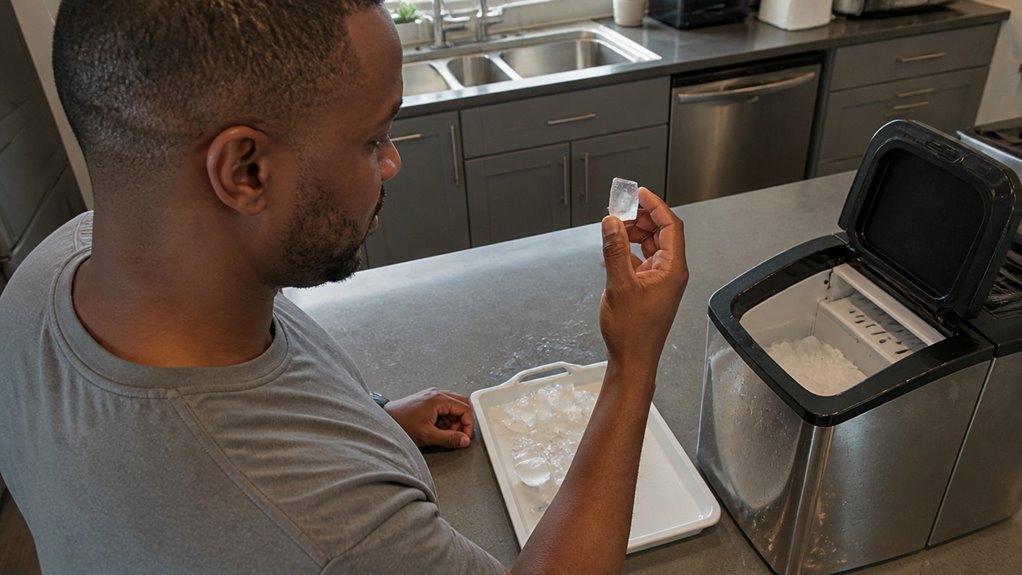
Before you spend on a half-cube ice maker, weigh five factors: production capacity, storage space, build materials, control features, and the cooling system. A 490-pound-per-day unit sounds impressive, but if your counter is tiny, you will bump your hip every time you reach for a glass.
We walk through each factor with real specs and real prices so you know what you are trading off before you buy. The goal is to match the machine to your kitchen, not the other way around.
Start with daily ice output because it drives the size and cost of the unit. Half-cube machines for home use typically produce between 50 and 150 pounds per day, and that number determines how often you empty the bin.
Storage space matters just as much as output. A large bin holds more ice but takes up more counter or undercounter room, so measure your available space before choosing a model.
Build materials affect both durability and noise. Stainless steel exteriors hold up better than plastic, and a heavier unit usually means better insulation and quieter operation.
Control features vary by price. Look for basic timers and indicator lights on budget models, and consider self-cleaning cycles or a water reservoir on higher-end units if you want less upkeep.
The cooling system separates efficient machines from wasteful ones. Air-cooled models are common for portable use, while water-cooled designs suit undercounter installations where heat buildup is a concern.
If you plan to install the unit under a counter, check the clearance for the drain pump or gravity drain. For electrical hookups, water lines, or built-in installation, follow the manufacturer’s instructions or hire a licensed professional.
For cleaning, mold, slime, or descaling, stick to the manufacturer’s instructions. Regular maintenance keeps the machine running, but skip any health claims about the ice or water quality.
Production Capacity
Production capacity is the first spec that will make or break your setup. Daily output ranges from under 100 pounds for compact undercounter units to over 600 for commercial models.
Pay attention to the ratings. You will see peak output at 70°F air and 50°F water, but the AHRI-certified number at 90°F and 70°F is lower because warmer conditions slow production.
An 88 lb/day machine suits a low-volume bar or home use. For a busy restaurant, you will want 330 to 600 lbs/day.
Larger outputs need bigger bins. Pair a 330 lb/day unit with a 119 lb bin, or a 672 lb/day system with a 532 lb bin.
Bigger capacity often means a taller, wider footprint, while smaller units fit snugly under counters. Match capacity to your demand, and you will have ice for years.
Storage Space
Storage space trips up many half-cube buyers, and I have stumbled there myself. Measure twice, order once, and you can still end up with a gap.
Bin capacity runs from a compact 25-pound built-in for low-volume home bars to a hefty 532-pound bin for high-demand operations. Daily production outpaces storage, so match bin size to peak usage or you will watch ice melt away.
Footprint matters too. Storage-integrated units span 26 by 28 inches up to 30 by 34, so check your undercounter fit first.
Bigger bins cut transfer labor during busy service, which is a real win. Separate units need the head and bin dimensions to align in width and depth.
Size your bin for your busiest hour, not your average day.
Build Materials
Choose a stainless steel exterior. It shrugs off humidity and wipes clean, while painted steel chips and rusts quickly with abrasive cleansers.
Inside, pick a polyethylene bin liner. It resists cracking and chemical degreasers, which prevents early failure.
A brushed finish hides fingerprints, so the bar area stays presentable. Thicker-gauge metal on hinges and slides prevents flexing and snapping under daily use.
Skipping quality hardware means paying for repairs later. Always prioritize corrosion-proof exteriors and tough interiors.
Your ice deserves a sturdy home, not a flimsy cage.
Control Features
A control panel should be chatty, not cryptic. Look for real-time status checks with icons. A flashing snowflake means trouble, not a fun surprise.
You need a digital screen that shows date and time stamps. That way, you know exactly who left a mess and when. It also cuts training time.
Automated cleaning cycles prompt you to scrub before the ice tastes off. Full bin alerts stop the ice from overflowing. Filter indicators tell you when to swap before gunk ruins your drinks.
Choose intuitive controls with buttons you understand. Proactive prompts keep the machine honest. A quiet machine is usually a dirty machine.
Cooling System
Now that your machine can talk back, it’s time to make sure it doesn’t overheat. For ice makers, you have two cooling paths.
Air-cooled units use ambient room air and are simpler, but they are picky about their environment. You will need 6 to 12 inches of clearance for airflow, and they struggle in rooms above 80°F.
At 90°F, your daily ice output can drop by up to 25% compared to 70°F. Water-cooled systems handle hot spaces better by running a continuous water supply to eject heat.
The trade-off is water usage, which adds 10 to 20 gallons per 100 pounds of ice. For cleaning, follow the manufacturer’s instructions: expect monthly dusting for air-cooled condensers, or periodic descaling for water-cooled models.
Water-cooled units need a dedicated water line and drain, which complicates placement. For installation involving electrical hookups, water lines, or drains, follow the manufacturer’s instructions or hire a licensed professional.
Air-cooled models release room heat, which can warm up your kitchen. For hot kitchens, go with water-cooled.
For occasional cocktails in a cool basement, air-cooled works fine, just give it breathing room. Keep the condenser clear and check the manufacturer’s care guide for routine upkeep.
Physical Dimensions
Physical dimensions decide whether your half-cube ice maker fits, so measure your space before you buy anything.
Undercounter units need 26 to 30 inches of width and 24 to 28 inches of depth. That range is your wall, not a suggestion.
Head-only models shrink the footprint to about 30 by 24 inches, but you will need extra room for a separate bin.
Height sneaks up on you. A self-contained unit with an internal bin runs 38.5 to 50 inches tall or more.
If you want a 532-pound daily output model, the remote bin adds 28.5 inches vertically. Clear your counters first.
Measure twice, then measure again. If space is tight, choose a compact internal-bin model in the 90 to 119 pound daily output range.
That setup skips the remote-bin hassle and keeps installation straightforward. For the bin clearance, drain pump, or gravity drain hookups, follow the manufacturer’s instructions.
Check the water reservoir capacity before you commit. If your unit has a self-cleaning cycle, use it as the manual directs.
For mold, slime, or descaling questions, stick with the manufacturer’s guidance. That keeps your ice maker running without guesswork.
A portable model gives you flexibility if you move it between counters or take it to a workspace. Just confirm the footprint fits your designated spot.
Nugget ice, clear ice, and bullet ice machines all follow the same physical rules. The bin size and daily ice output change the dimensions, but the measuring process stays the same.
Start with the width and depth of your cabinet or counter, then check the height with the lid open if the unit needs clearance. Write those numbers down before you shop.
Warranty Coverage
A warranty is your safety net when your ice maker stops freezing mid-summer. Check the fine print for coverage terms on the whole unit and key parts.
You will typically get one to three years on the entire machine. Compressors and evaporators often carry five years on parts, with labor capped at three.
The evaporator matters most because it touches water directly, so scaling and corrosion hit it hard. Self-contained undercounter models often have shorter overall warranties than modular units due to their complexity.
Verify that professional installation and regular filter changes are required. Skipping either voids coverage on refrigeration parts.
Nobody wants a half-cube maker that is only half-frozen. Prioritize a longer evaporator warranty, at least five years on parts.
Look for two years of coverage on the rest of the unit. Then call it.
Frequently Asked Questions
What Is the Recommended Cleaning Schedule for Half-Cube Makers?
Clean your half-cube maker every two weeks with a vinegar solution, and descale monthly if you have hard water. This schedule keeps mineral buildup from clouding both the ice and the machine’s interior.
Follow the manufacturer’s instructions for any cleaning or descaling product, since models differ in material and water path design. In my experience, skipping a session is what leads to slime or off tastes, so mark it on your calendar.
If your unit has a removable reservoir, empty and dry it completely after each cleaning to prevent mold. For a quick check today, measure your counter and cabinet height against the product’s spec sheet, since half-cube makers vary in footprint.
Also verify the daily ice output listed by the manufacturer, not a generic number, because capacity depends on your model. For any water line or drain hookup, follow the manual and hire a licensed professional when needed.
Finally, if you prefer chewable ice like nugget or pebble styles, the same cleaning routine applies, just stick to the maker’s schedule for filters or descaling cycles. Your best reference is always the manual, not a one-size-fits-all rule.
How Noisy Are These Undercounter Ice Makers?
Most undercounter ice makers are not very noisy, humming around 50 decibels, which is quieter than a typical fridge. The compressor is rarely the issue, but the ice drop can add a noticeable clatter during production cycles.
Expect the ice drop to be the loudest moment, especially in a small kitchen. Check the spec sheet for insulation levels, as better padding can soften that sound.
For a concrete tip, measure your counter and cabinet height before buying, because airflow clearance above the unit affects both noise and performance. Also, review the daily ice output on the spec sheet, since models differ widely in production speed.
If you prefer chewable ice like nugget style, expect a slightly different drop tone, but the decibel rating stays similar. For any drain or water line installation, follow the manufacturer’s instructions and use a licensed professional when needed.
Does Water Hardness Affect Cube Clarity and How to Fix?
Yes, water hardness directly affects cube clarity, as dissolved minerals leave a white, cloudy film on your ice.
To fix this, use filtered or distilled water in your ice maker, or install a whole-home softener if your supply is very hard.
Don’t skip this step, because pure water is the single biggest factor in clear cubes, so test your tap water first with a simple strip kit.
For a quick win today, empty and dry the reservoir completely before switching to purified water, as leftover mineral scale can recloud new batches.
Also, check the manufacturer’s manual for descaling instructions, since models differ on cleaning frequency and approved solutions.
If you’re using a countertop unit, verify its daily ice output on the spec sheet to match your needs, and remember that chewable ice, like nugget ice, may still appear slightly frosty even with soft water.
What Is the Average Daily Electricity Usage in kWh?
The average daily electricity usage for an ice maker is typically one to three kWh, but the exact amount depends on the model, usage frequency, and ambient heat. Don’t assume a fixed number, since a compact countertop unit draws far less than a larger built-in machine.
Check your unit’s spec sheet for wattage and daily ice output, as these directly affect energy consumption. Running the machine continuously spikes usage, while intermittent use cuts it significantly, so monitor your actual draw with a plug-in meter.
For a concrete step today, measure the counter and cabinet height to confirm your model fits and allows proper ventilation, which reduces strain and energy waste. If your unit uses a drain or water line, follow the manufacturer’s instructions and hire a licensed professional for the hookup.
In my experience, smaller chewable ice formats like nugget ice often cycle more often, so verify the spec sheet’s daily output rather than guessing. For cleaning or descaling, always follow the manufacturer’s manual to keep efficiency high.
How Long Can Ice Stay in the Bin Without Melting?
Ice can stay solid in the bin for roughly 8 to 12 hours, depending on your bin’s insulation and room temperature. After that, cubes will start clumping, so plan to use them within a day for the best quality in drinks like pebble ice cocktails.
For longer-lasting ice, keep the bin away from heat sources and avoid opening it repeatedly. You can also measure your counter and cabinet height before buying a countertop model, since smaller bins have less ice retention.
Check your machine’s spec sheet for daily ice output, because a higher output helps you cycle through fresh ice faster. Keep the interior dry and clean to reduce premature melting, and follow the manufacturer’s manual for any drain or water line hookups.
If you need ice for a party, empty and dry the reservoir before filling it with new ice. For built-in installations, always follow the manufacturer’s instructions and use a licensed professional for water line connections.
Rounding Up
The Manitowoc Indigo NXT is the clear winner for crystal-clear half-cube ice, even with its higher price. It produces 490 pounds daily, which keeps a crowded Friday bar fully stocked.
Check your available space and confirm you can meet the water line and drain requirements before committing. Compare the daily ice output against your peak needs, and review the self-cleaning instructions to reduce your upkeep.
That single statistic, 490 pounds, tells you it handles serious demand. If you choose a slower budget model like the Maxx Ice, expect it to work, but not keep pace.
Choose based on your busiest night, not your average one.